
Welcome to those who joined us this month in our field journal – N°14 / October 2026
EDITORIAL
We have spent months talking about the tools and techniques of coral restoration — the structures, the species, the missions. This month, we want to take a step back and look at the broader picture: why is the urgency so great? Why do corals no longer have the time to recover?
The answer, in large part, lies in El Niño. This natural climate phenomenon, now amplified by human-caused warming, is shortening the intervals between bleaching events to the point where reefs can no longer regenerate between them. Understanding this mechanism is essential to understanding what we are fighting for.
In our last newsletter, we shared that corals are running out of time. Today, we explain why.
Thank you for being part of The Coral Planters community. Happy reading!
Together, let’s make the ocean’s voice heard.
Antoine – The Coral Planters
Featured : El Niño: When the Ocean Turns Against the Reef
El Niño is a natural climate phenomenon that occurs every two to seven years in the Pacific Ocean.
Its mechanism: the trade winds, those steady equatorial winds that normally push warm surface water toward Asia and Australia, weaken or even reverse. Warm water flows back toward the Americas, raising sea surface temperatures across vast stretches of the Pacific by 1 to 3°C above average.
For coral reefs, that difference is everything. Corals live in a narrow thermal range. When temperatures exceed their threshold by just 1°C for several weeks, they expel the symbiotic algae (zooxanthellae) that live in their tissues and provide up to 90% of their energy. The coral turns white bleaches and, if heat stress continues, dies.
Three episodes have already left their mark on global reefs:
- 1998 : The first mass global bleaching event: 16% of the world’s coral reefs were destroyed in a single year.
- 2016 : The most severe El Niño ever recorded struck the Great Barrier Reef: 50% of its corals bleached. Some sections have never recovered.
- 2023 – 2024 : The 4th global bleaching episode is currently underway, driven by a combination of El Niño and record ocean temperatures linked to climate change.
What makes the situation increasingly critical is the shrinking window between events. In the 1980s, a reef had roughly 25 to 30 years to recover between bleaching episodes. Today, that window has narrowed to fewer than 6 years in many regions and for the most vulnerable reefs, to less than 2.
Corals simply cannot rebuild their colonies fast enough.
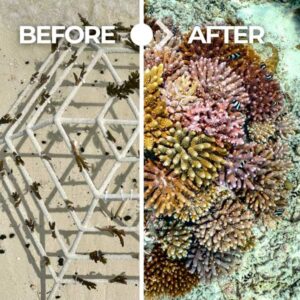
This is exactly why the work of The Coral Planters matters: not to replace nature, but to buy it time by transplanting fast-growing, heat-resistant species before the next wave arrives.
→ Sources: NOAA Coral Reef Watch – Global Bleaching Alert System; Hughes et al. (2017), Science, “Global warming and recurrent mass bleaching of corals”; IPCC AR6, Chapter 3 – Ocean and Coastal Ecosystems.
Our latest Wave Radio feature
Why coral reefs are disappearing: the full list of threats
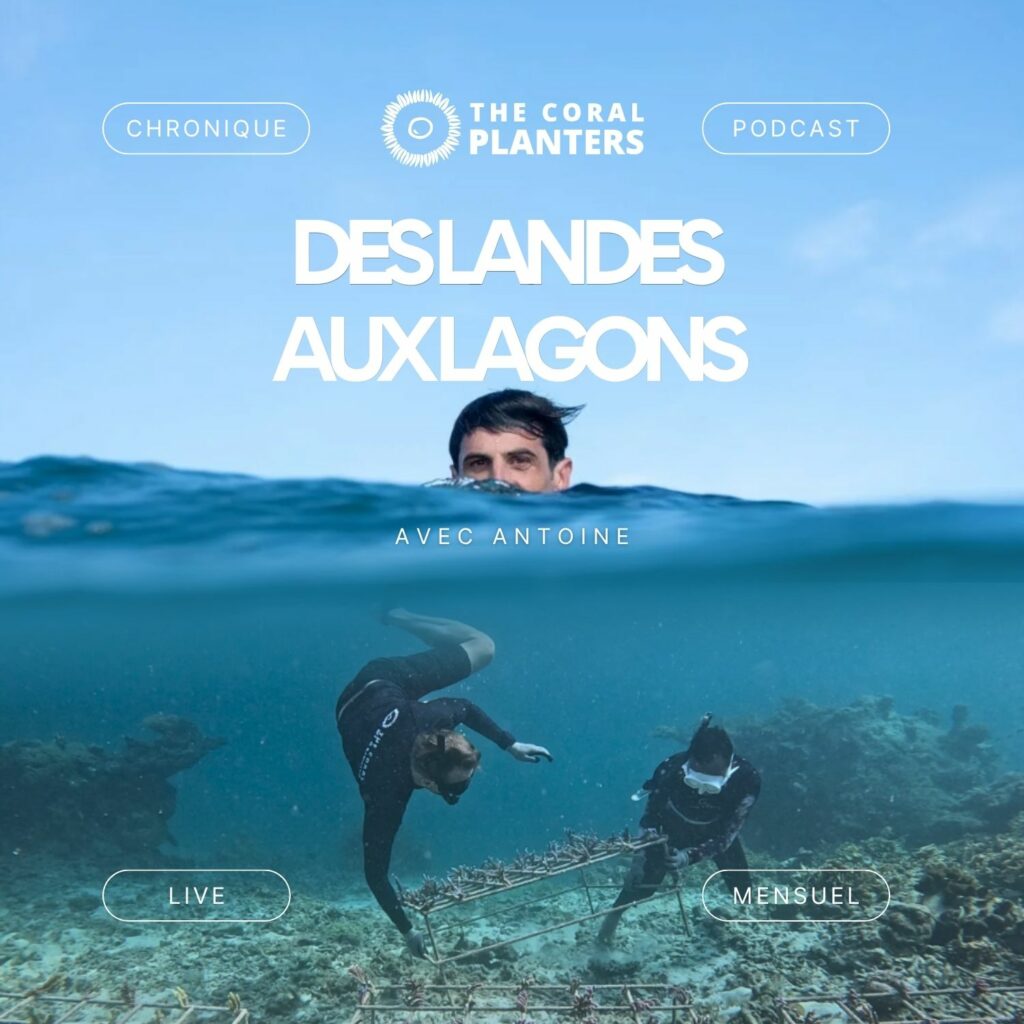
Chronicle #6 of Des Landes aux Lagons dives deeper into the El Niño phenomenon and its consequences for the reefs we work on. It covers the science, the human stories behind the data, and what coral restoration can realistically achieve in this accelerating climate.
Listen on podcast or on Wave Radio Hossegor.
Episodes are available on our website: : PODCAST
Coming up
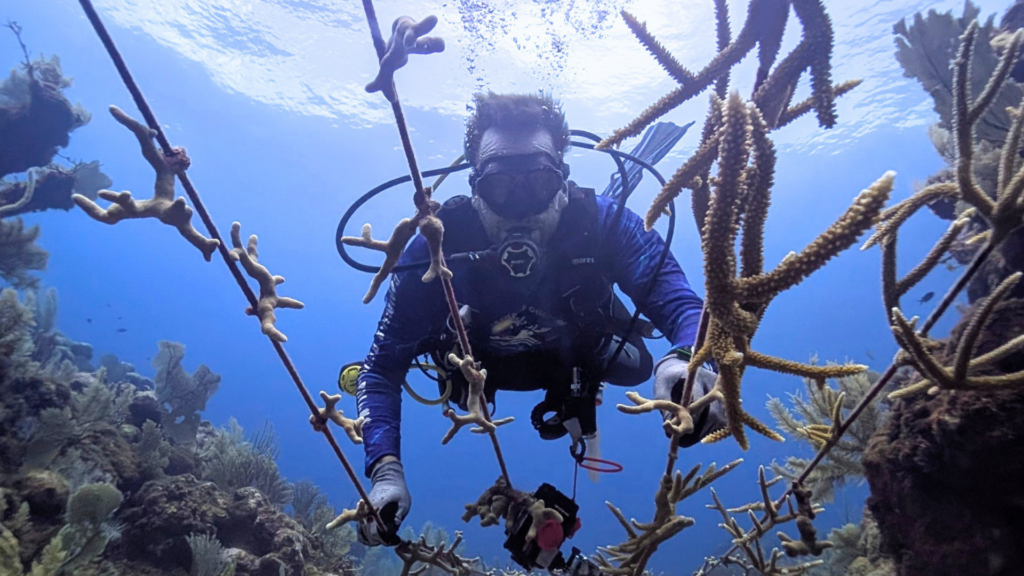
Next month, we’re taking you to the Caribbean for our radio segment #7: the story of the launch of our new project in Roatán, Honduras.
Thank you for reading and for your engagement.
The Coral Planters Team
