
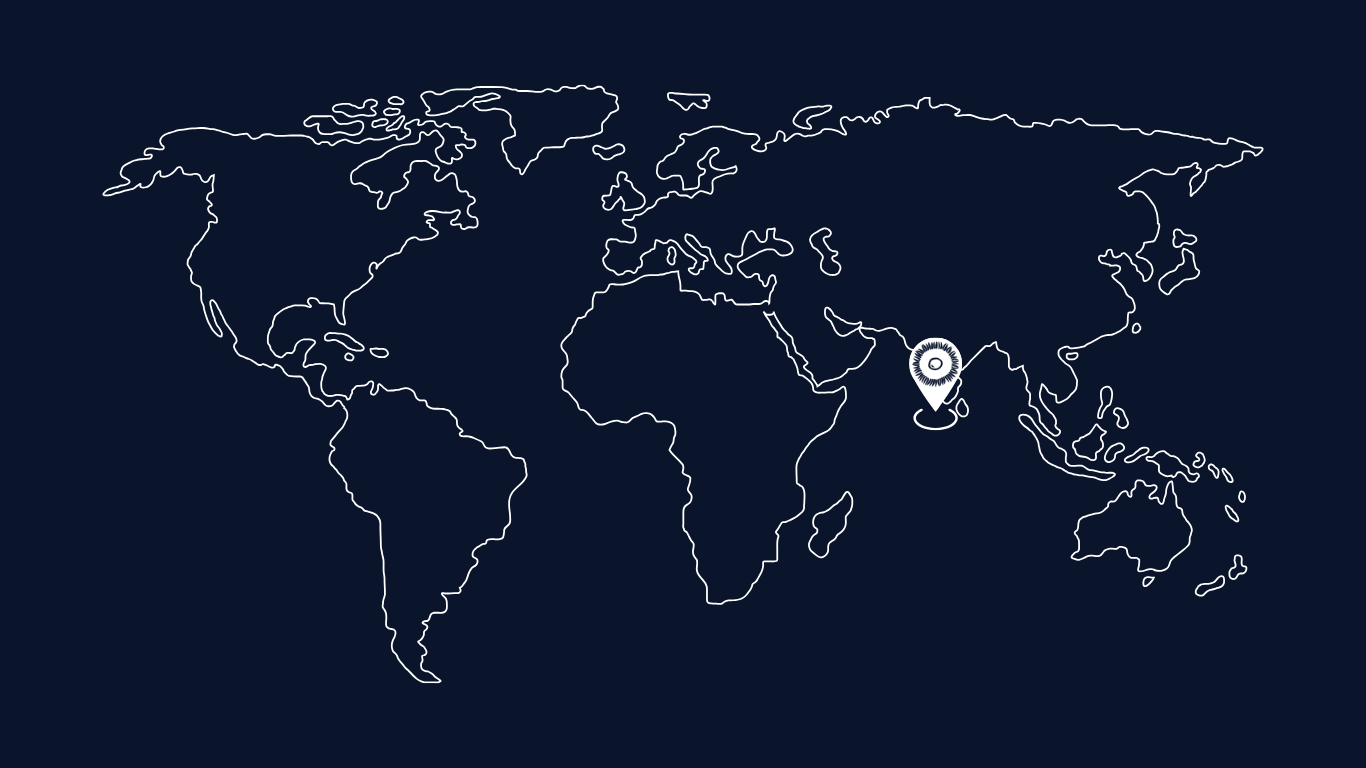
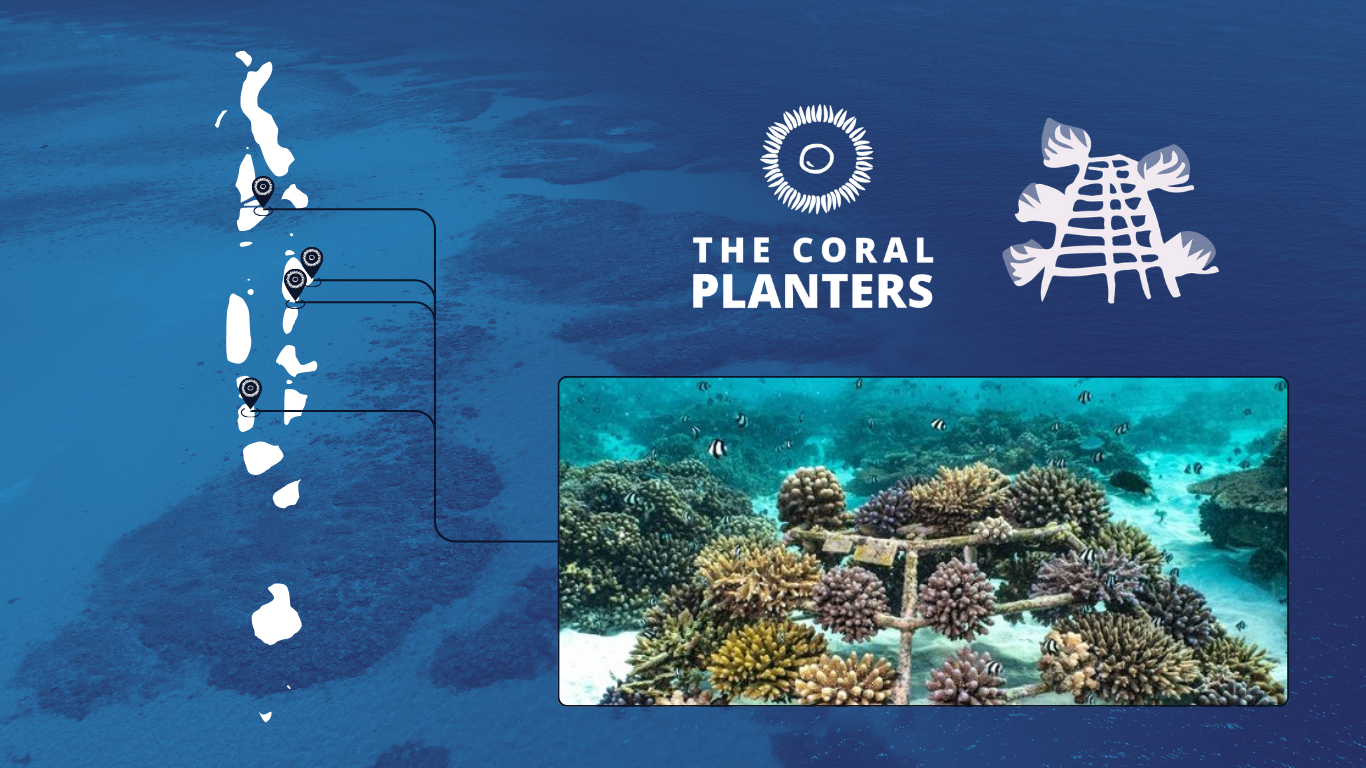
In the turquoise waters of the Maldives, beyond the postcards, lies a fragile world under pressure.
A reef system that gave life to an entire nation, and which now faces an uncertain future.
This reef is vital to the health of the ocean, local communities, and the islands themselves.
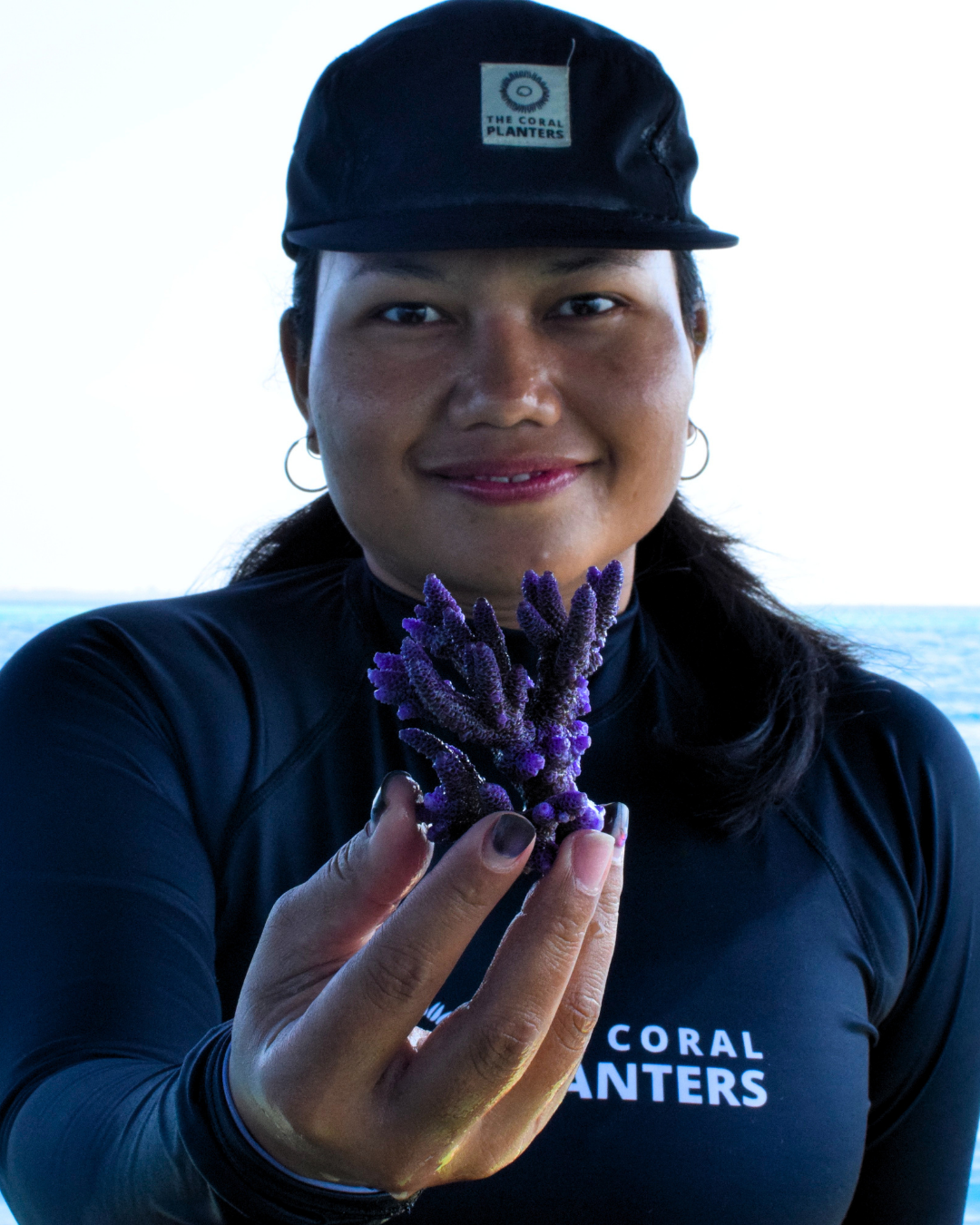
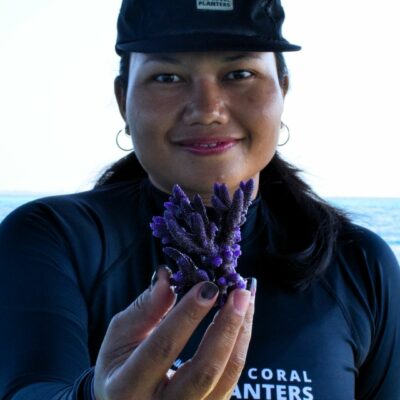
In partnership with Reefscapers, a pioneering local organization specializing in coral propagation, we are working to restore what has been lost and protect what remains.
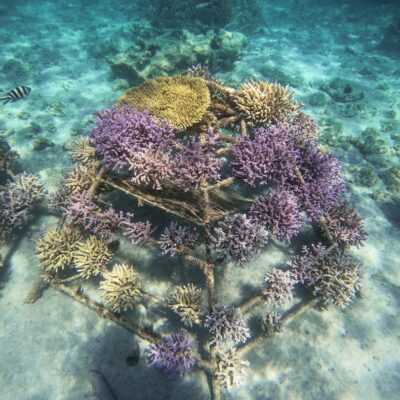
Using scientific techniques and methods adapted to local conditions, we implant coral fragments on custom-made structures, monitor their growth, and ensure their survival.
But this project goes far beyond restoration. It is a vibrant collaboration between scientists, local communities, and the tourism industry.
It’s about raising awareness where it matters most. It’s about showing that even outside of official marine reserves, action is possible, and that action is urgent.
Because every coral counts.
Because reefs are more than just landscapes: they are life systems.
And because ocean healing begins where the damage began.
With Reefscapers, we believe that restoration is a message of hope and a commitment to the future of island life.
1. Adopt your coral
2. Access our form to personalize your certificate.
3. Receive your certificate via email as a printable PDF.
4. Your coral is then transplanted onto a Community Reef, a reef made up of around fifty adopted fragments. Once the reef is established, you receive an official planting certificate featuring its unique tracking number.
5. Watch your Community Reef grow. Track its progress via our “Follow My Reef” page, where new underwater photos are posted every six months, allowing you to observe your reef’s growth over time.
Adopt a reef and help us protect marine ecosystems that harbor 25% of marine biodiversity.
The reefs consist of 50 coral fragments.
1. Adopt your reef
2. Receive your personalized adoption certificate
3. Track your reef’s growth