Welcome to those who joined us this month in our field journal – N°13 / September 2026
EDITORIAL
This month, we’re diving into the news. Because while we were planting corals in Indonesia and Mozambique, a major study dropped. And it confirms what we’ve been seeing on the ground for years.
Coral reefs are running out of time.
Thank you for being part of The Coral Planters community. Happy reading!
Together, let’s make the ocean’s voice heard.
Antoine — The Coral Planters
Featured : Coral reefs are running out of time to recover.
In late August 2026, the New York Times published a report that circled the globe.
Titled “The World’s Coral Reefs Are Running Out of Time to Recover”, it draws on the largest global assessment of coral reef health ever conducted.
The findings are stark.
Coral reefs declined by 9.5% between 2020 and 2024, compared to the 1980-2009 baseline. And 2024 recorded the largest annual decline in history: 87% of the world’s reefs affected in a single year.
But the most alarming figure isn’t that one.
It’s that reefs no longer have enough time to recover between heatwaves. A reef can take decades to regenerate after a bleaching event. But these events are nowcoming too fast, too intense, too long. The reef arrives exhausted at the next wave.
—
We see this on our own restoration zones.
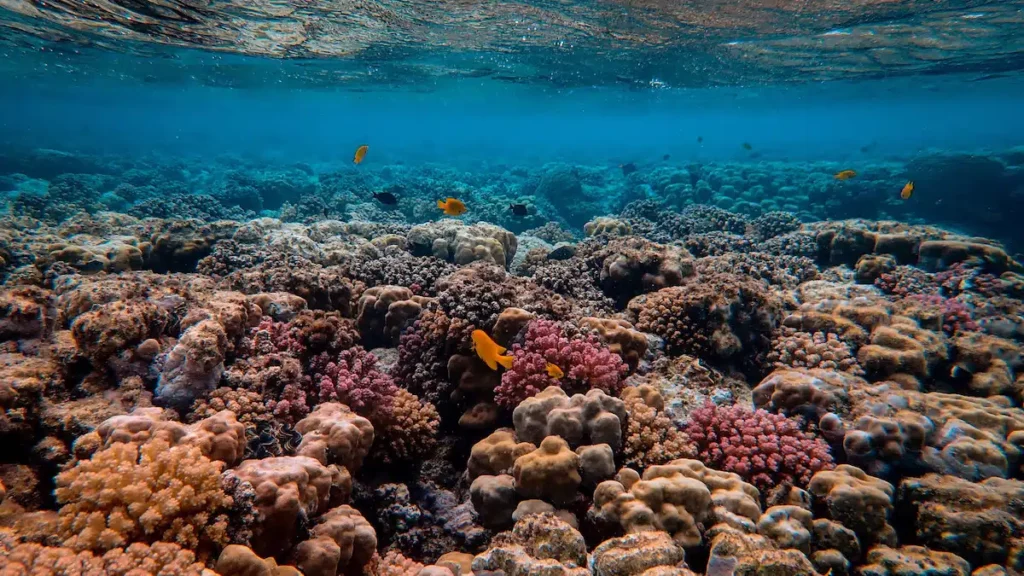
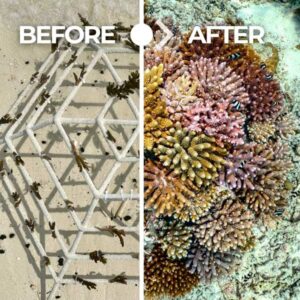
On the island of Rodrigues, in the Indian Ocean, bleaching events have left deep marks. Entire sections of ghost reefs, white, silent. Right beside the structures we’ve planted, where life is slowly coming back, fragment by fragment.
This is exactly what the report says: coral restoration is necessary. But it can’t do everything. It buys time. Precious time for minds to change, for policies to adapt, for a reef to hold on for another ten, twenty, thirty years.
That’s why we keep going. Not because we think we can save everything. Because every coral planted counts.
New: Track My Coral : Follow your coral in real time.
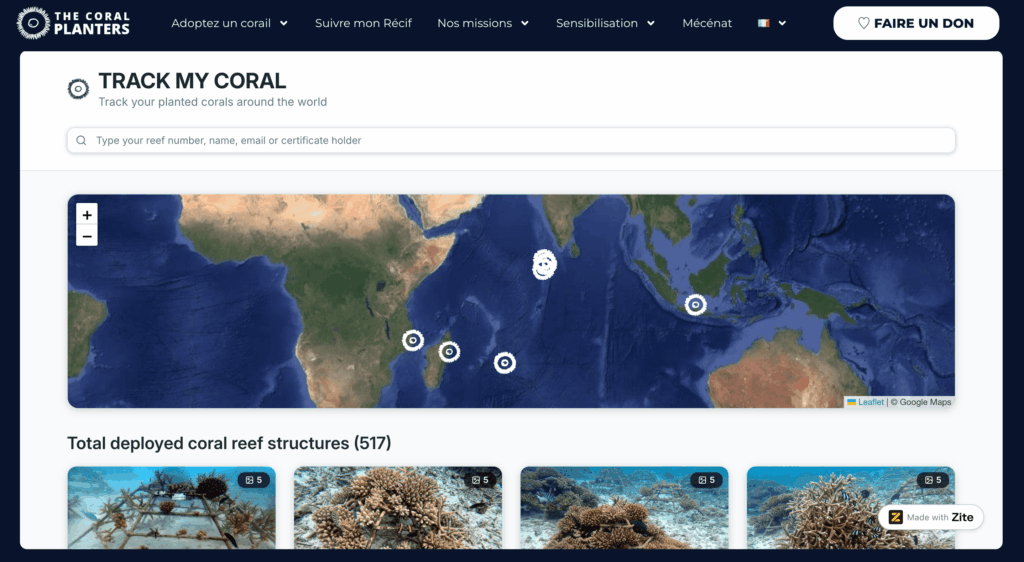
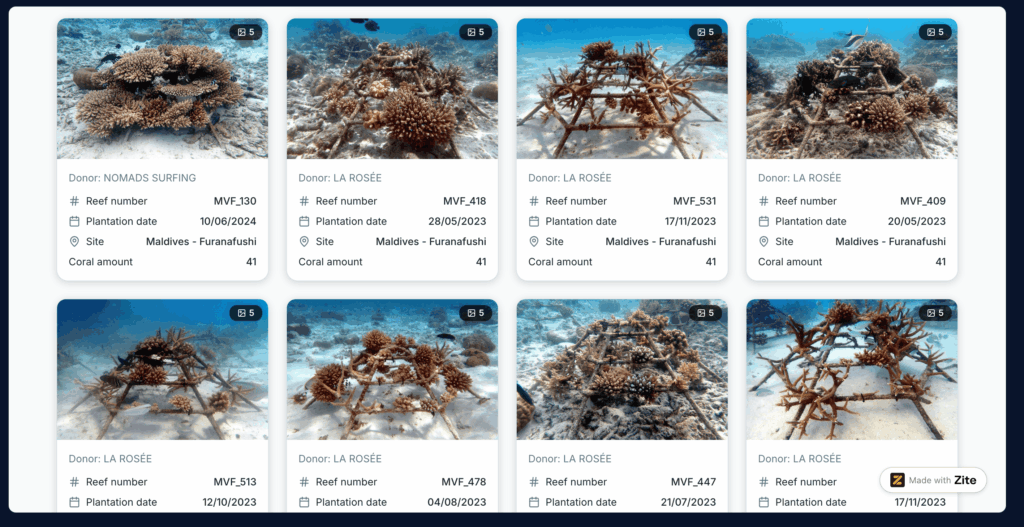
From the start, we’ve been asking you to trust us. You adopt a coral, we plant it, we tell you it’s growing. Today, you can see it for yourself.
We’ve launched Track My Coral : a free, public online tracking tool that lets you see exactly where your corals are planted in the world, and how they’re evolving.
How does it work?
If you’ve adopted a reef, you’ll receive a photo of your reef every 6 months, directly in your inbox. If you’ve adopted fragments, they join a community reef, planted once 50 fragments are gathered. Same principle: a photo every 6 months.
And for everyone, even those who haven’t adopted yet, we’ve created an interactive map on our website. All our restoration zones, all our planted reefs, with their follow-up photos. Open to all. Free. No sign-up required.
Because restoring reefs means building something visible, measurable, real.
Something you’re part of.
Our latest Wave Radio feature
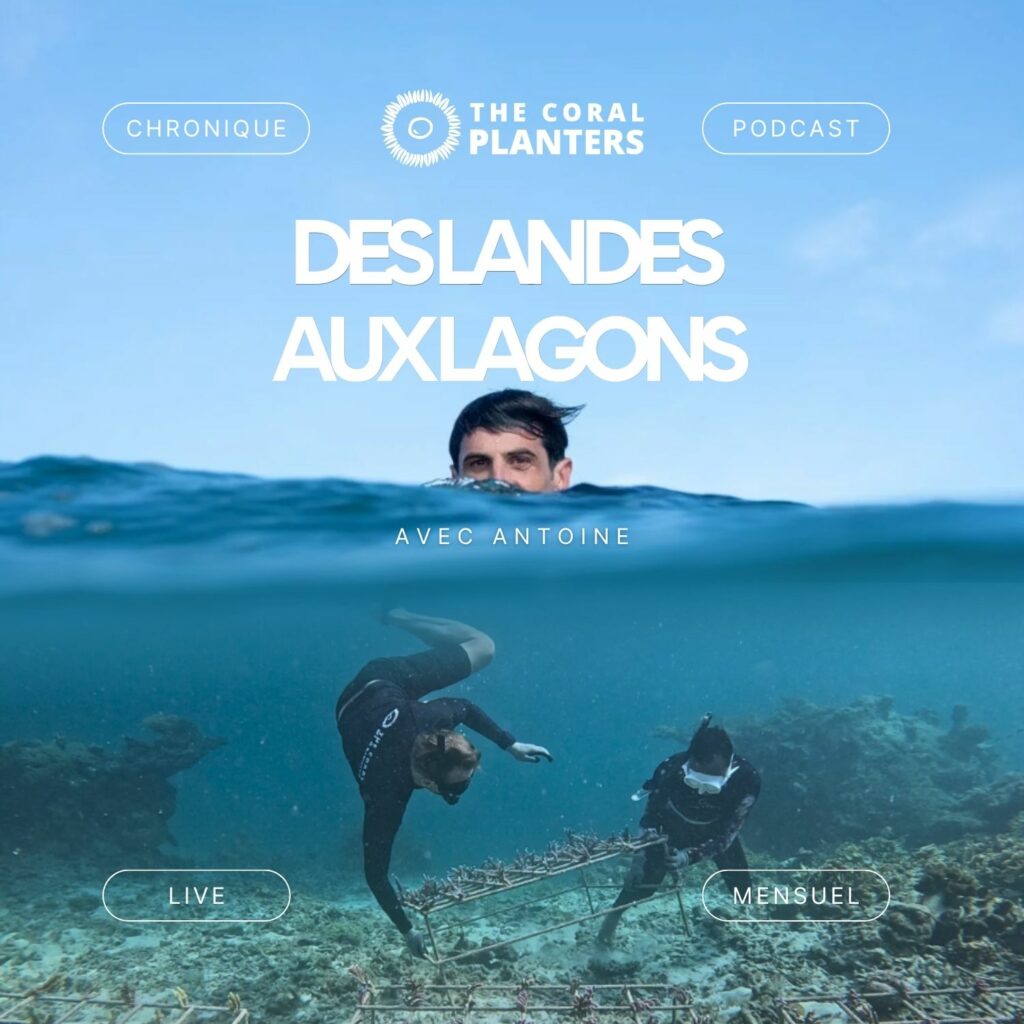
Why coral reefs are disappearing: the full list of threats
This New York Times report couldn’t have come at a better time.
Because in our latest feature on Wave Radio Hossegor, we were addressing exactly this question.
Climate change and bleaching, overfishing, chemical pollution, plastic, noise and light pollution, tourism and direct human activity, we went through the full list of threats facing coral reefs. And we tried to make it vivid, concrete, rooted in what we actually see in the field.
If you missed it, it’s available on our website and on the Wave Radio website.
Episodes are available on our website: PODCAST
Next live broadcast: Tuesday 28 July at 8:30am → WAVE RADIO
Coming up
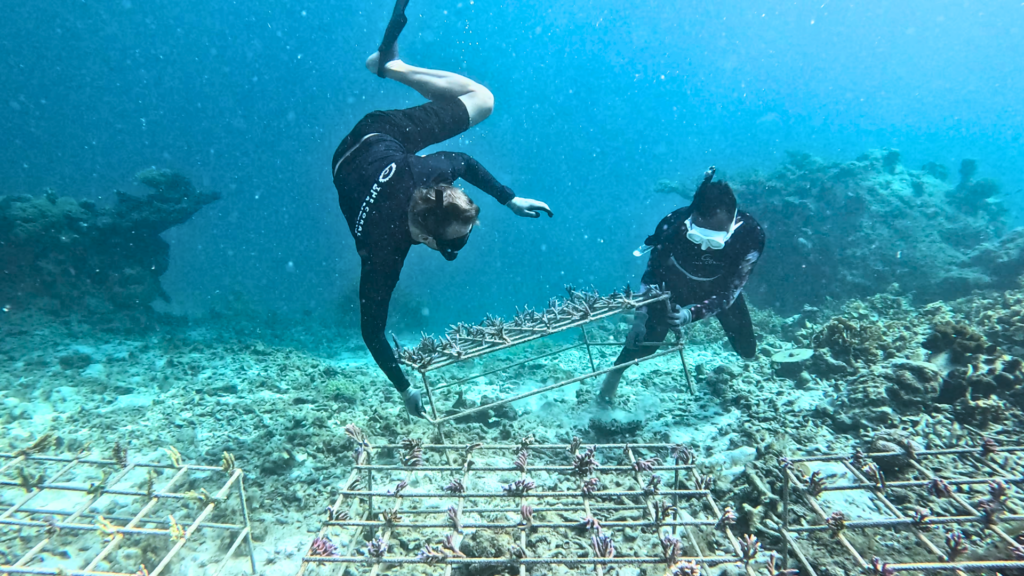
Next month, we’re taking you to Indonesia for feature #5 an inside account of opening our 9th and 10th restoration zones in the Karimunjawa archipelago, at the heart of the Java Sea.
Thank you for reading and for your engagement.
The Coral Planters Team