
Welcome to our coral field journal – N°11 / July 2026
EDITORIAL
This month, we’re taking you to Mozambique. Sébastien visited a few months ago: 14 days on the ground to assess one year of restoration in Mulala Bay. What he found, the successes, the challenges, and what we take away from it.
Thank you for being part of The Coral Planters community. Happy reading!
Together, let’s make the ocean’s voice heard!
Antoine — The Coral Planters
Top Story: Mozambique, one year later
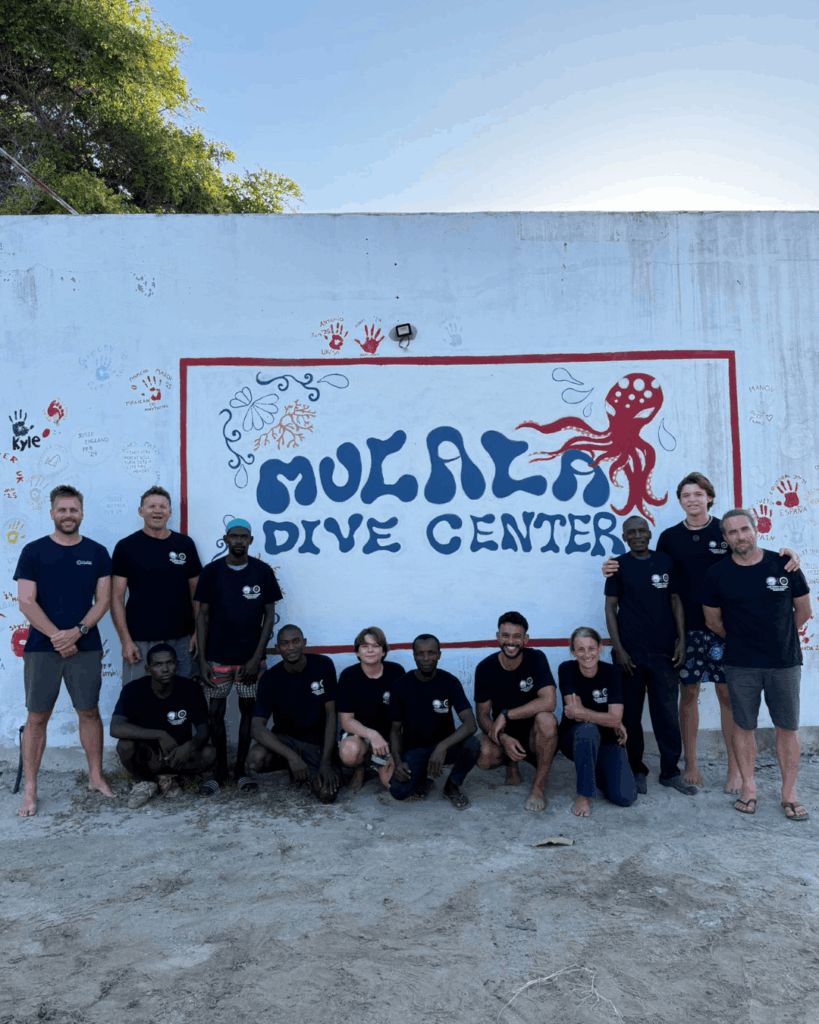
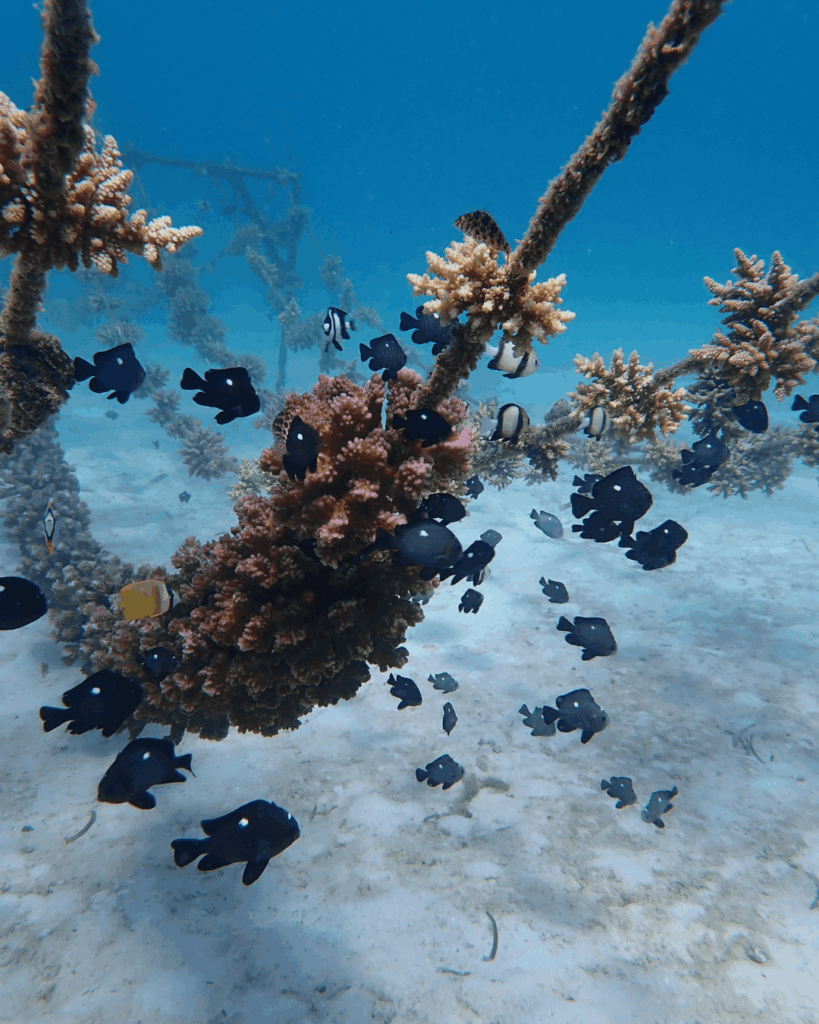
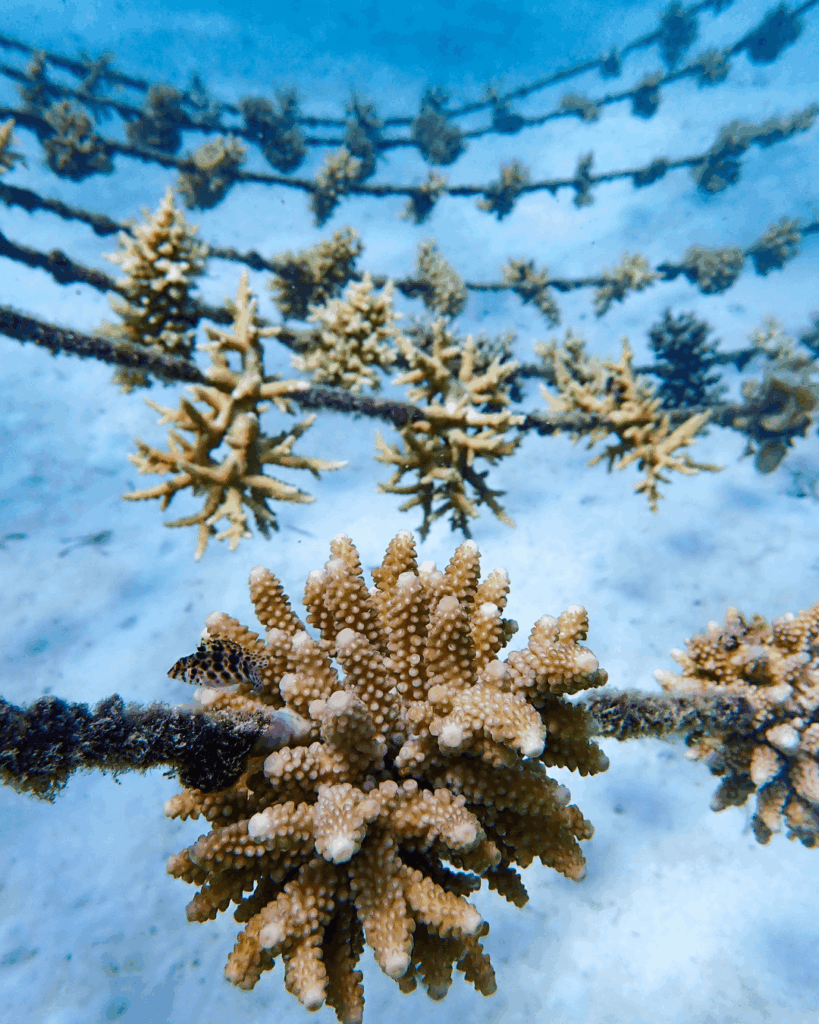
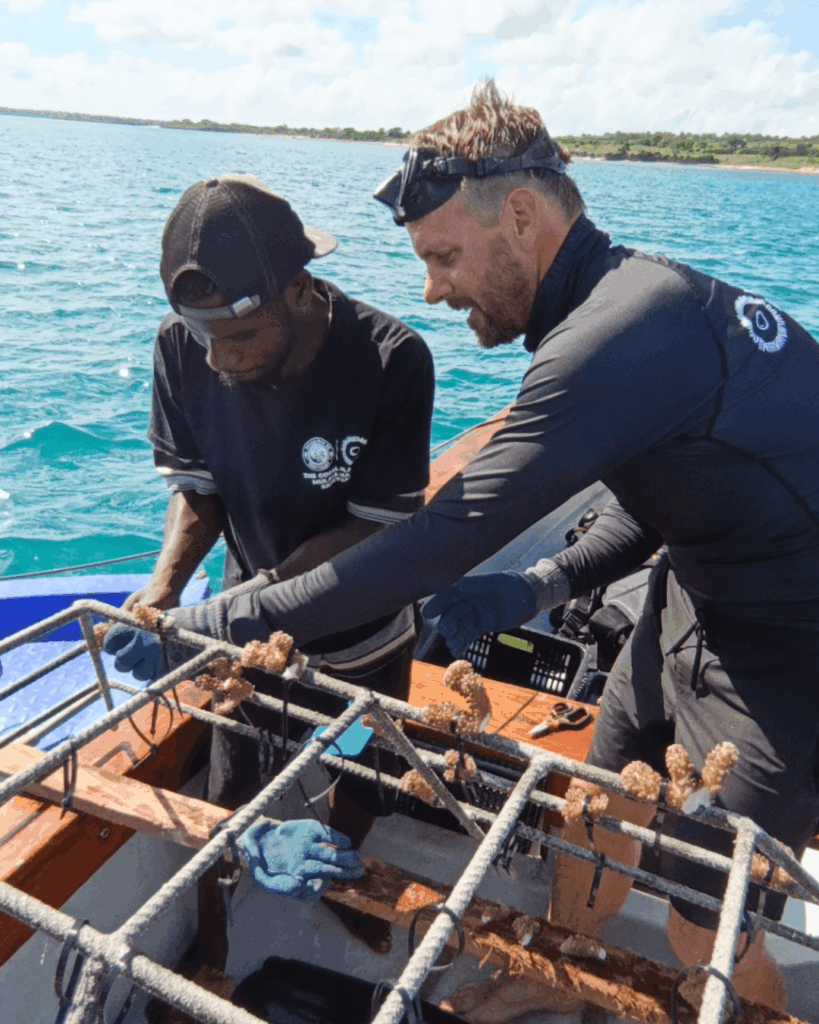
April 2026. Sébastien sets foot in Mozambique again for his third visit in two years to the Mulala Marine Sanctuary project. 14 days on the ground with a clear objective: assess the health of the corals one year after the official launch of the collaboration.
The Mulala Marine Sanctuary covers approximately 1 km² of mangroves, seagrass beds and reef zones, managed by Amanda, Johannes and their team. It is also a living space for international volunteers who come for several weeks to participate in marine conservation projects on site. A unique location, with all the infrastructure needed to carry out a large-scale restoration project.
Since the beginning of the partnership, more than 8,000 corals have been planted on the site: 2,100 on seven nurseries, and more than 5,000 on 87 structures.
—
The nurseries first. The news is very encouraging: beautiful colony growth, excellent overall condition, around ten species represented, and relatively simple maintenance. The biodiversity present around the nurseries reflects a good general health of the environment.
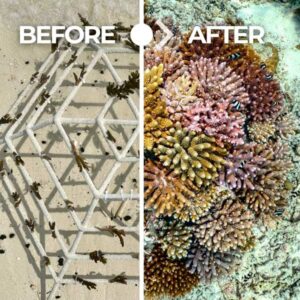
The structures, on the other hand, tell a more nuanced story. The corals remain broadly healthy, but growth is slower and the structures are experiencing heavy biological colonisation: algae, shells, fouling. Out of 87 structures, around 35 were fully cleaned and restored during the mission. About forty still require thorough intervention. The particular conditions of Nacala Bay require more intensive maintenance than our usual protocols — and that is precisely what we are working to address.
The good news: a newly sponsored boat will significantly improve logistics and daily monitoring of the site. A more powerful temperature sensor has also been installed to improve environmental data tracking.
—
One thing you may not know about Mozambique: it is the only one of our sites where we use coral nurseries. At our other restoration zones, we harvest fragments directly from healthy colonies and plant them onto structures. In Mozambique, reef degradation is so advanced that too few healthy colonies remain to do this without weakening them further. Nurseries allow us to grow fragments under optimal conditions for several months, before replanting them onto structures once they are sufficiently developed. This is precisely why we have decided to temporarily pause new plantings: the nursery corals still need time to grow before they can take over.
—
This pause also allows the sanctuary teams to focus on the complete restoration of existing structures, as well as the other projects that make this partnership so rich: volunteer programme, mangrove restoration, sea cucumber farms. All projects that go hand in hand with coral restoration, and in which the Mulala Marine Sanctuary is committed alongside the local villagers and fishermen.
PODCAST: FROM THE LANDES TO THE LAGOONS
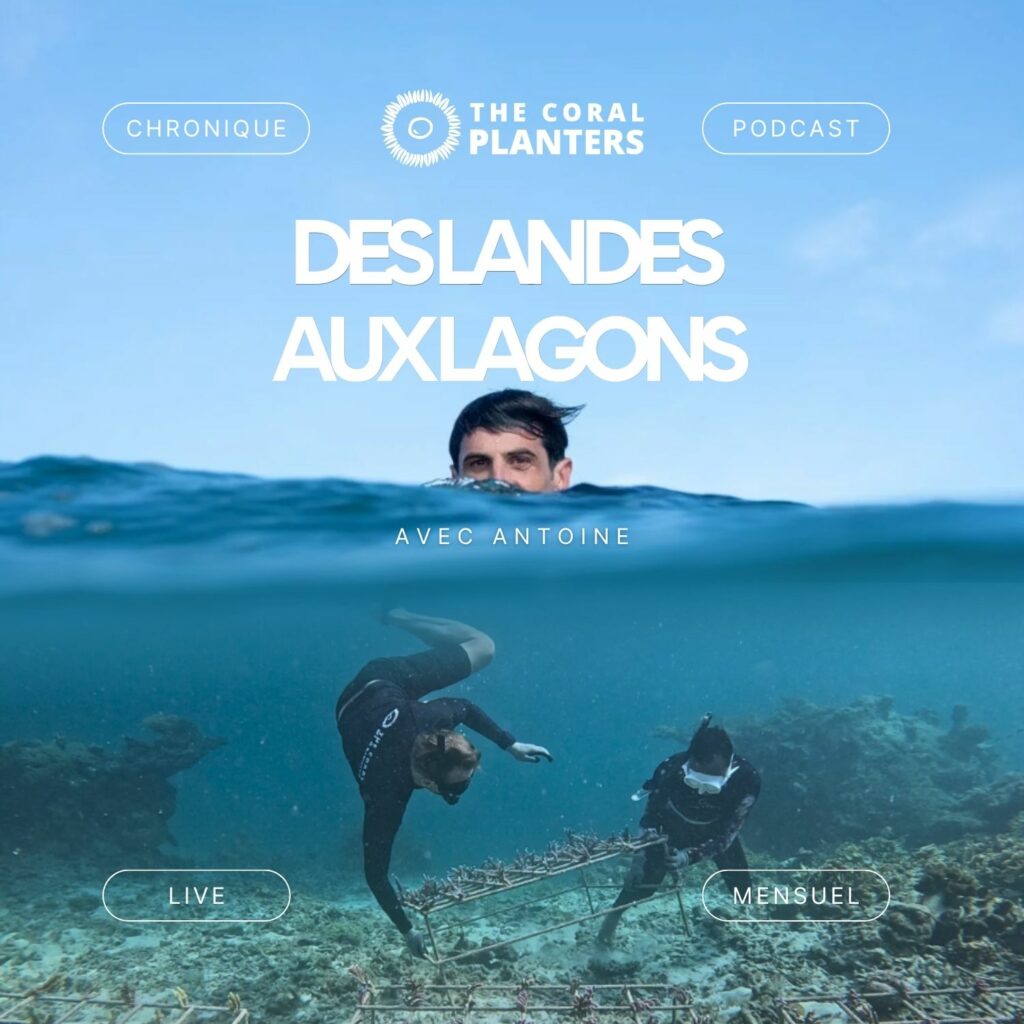
May marks a new launch. Every month, find Antoine at the microphone of Wave Radio Hossegor for a monthly feature on coral reefs and The Coral Planters’ actions.
The first two episodes are available (in French only) under the Awareness -> Podcast tab
Episode 2 [30 June]: How we restore coral reefs
Episode 1 [26 May]: France, the world’s 4th largest coral power
COMING UP
Next month, we’re taking you to Indonesia, where we have opened a new restoration zone in the heart of the Java Sea.
Thank you for reading and for your engagement.
The Coral Planters Team
